When a machine dies, the first instinct is the old one: get it to a shop. For most truck and heavy equipment failures in Southwest Florida, that instinct is expensive. Here is the actual math.
The tow-and-shop path
Start with transport. A dead Class 8 truck needs a heavy wrecker; a dead excavator needs a lowboy, a permit load if it is big enough, and an operator on both ends. Heavy recovery and equipment transport bill by the hour plus mileage, and in this region a single haul commonly runs into the high hundreds or beyond before anyone has diagnosed anything. If the machine cannot load itself, add winching time.
Then the machine waits. Shops work a queue, and your dead loader does not jump it. Two to five business days between drop-off and diagnosis is a normal experience, and the crew that machine was supporting is either standing around, renting a replacement, or reshuffling the schedule around the hole.
Then it comes back. That is the transport bill a second time.
The mobile path
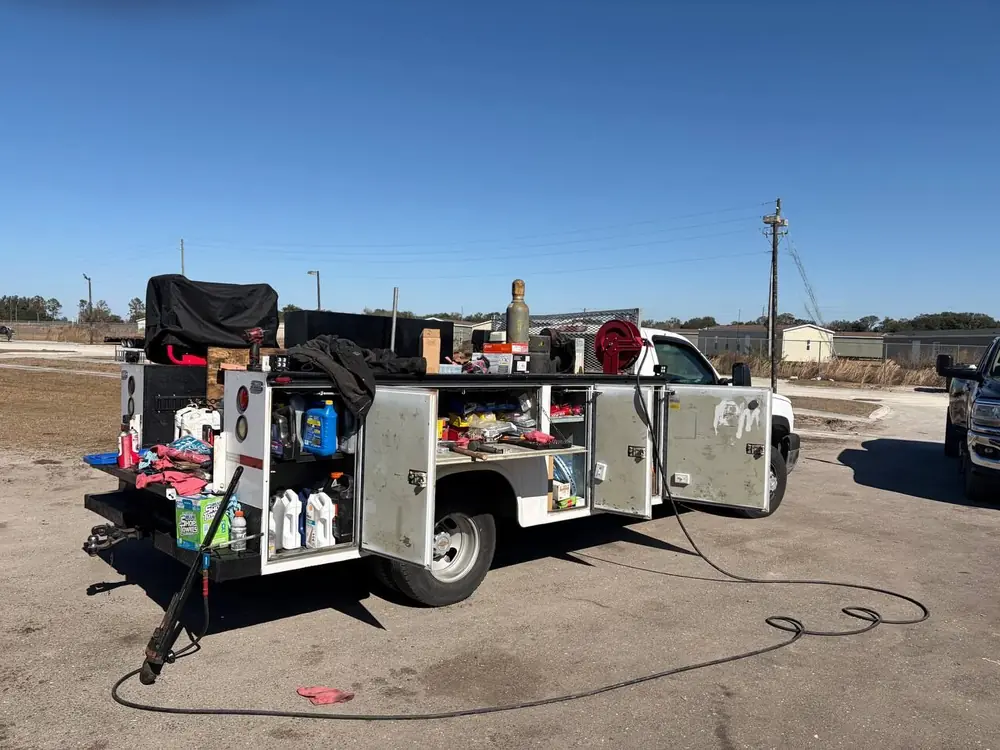
P&C's rates are listed, so the math is simple. Travel time bills at $120/hr from Lehigh Acres, the diagnostic hookup is $150, and labor is $155/hr standard. A typical field repair, a hydraulic hose, a charging fault, a no-start, a brake problem, gets diagnosed and fixed in one visit, the same day when the schedule allows. The machine never moves, and neither does your crew.
Compare the shapes of the two bills. The tow path stacks transport twice, shop-queue days, and downtime on top of the same repair labor you would have paid anyway. The mobile path is the repair plus a drive.
The number nobody itemizes: downtime
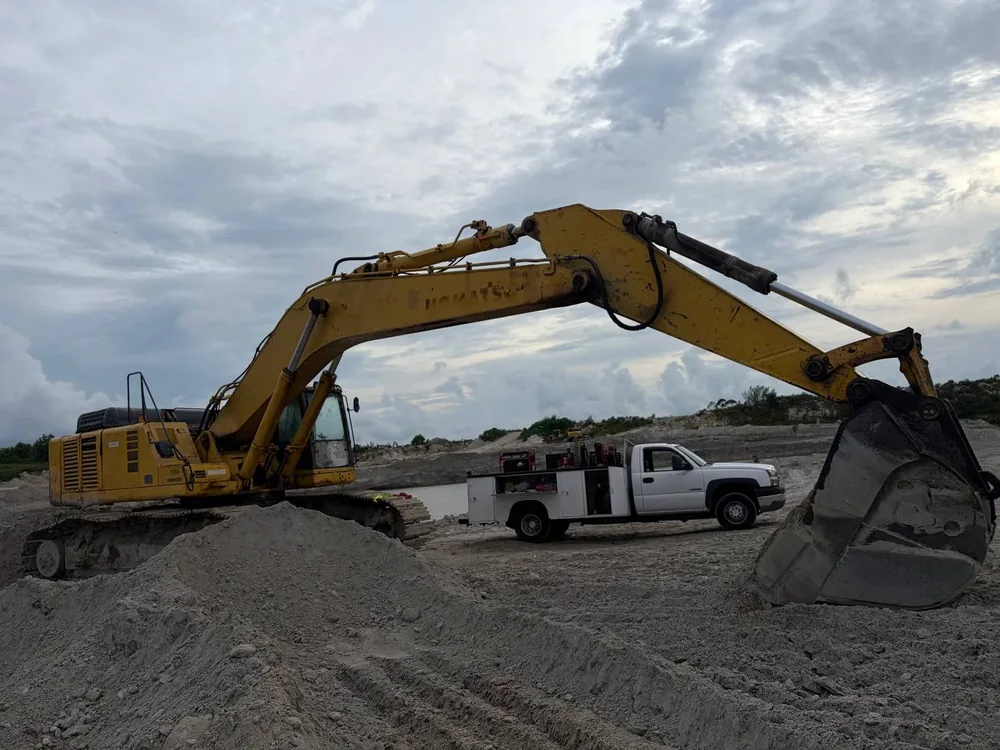
The repair bill is not the real bill. A machine down for four days costs four days of the work it was doing: an idle crew, a rental to cover it, a schedule slip that ripples into the next job. For an owner-operator truck, every day parked is a day of revenue that never existed. Downtime is why the cheapest-looking option, waiting in a shop queue, is usually the most expensive one.
When the shop is the right call
Honesty matters more than marketing: some jobs belong in a shop. Full out-of-frame engine rebuilds, work that needs a crane or a press, and major machine-tool repairs are shop jobs. Part of a proper mobile diagnosis is telling you that before the money is spent, not after. What a diagnostic hookup actually reads covers how that call gets made. What a diagnosis-first mobile visit guarantees is that if your machine does end up on a lowboy, it is going there for a confirmed reason, not a guess.
The short version
Before you call a tow, call a mechanic who comes to the machine. The worst case is you spend a travel charge and a diagnostic fee to learn exactly what is wrong. The usual case is the machine is back to work the same day and the lowboy never shows up. Most of these calls land in Fort Myers and across Lee County, but the math holds anywhere the service truck can reach.